
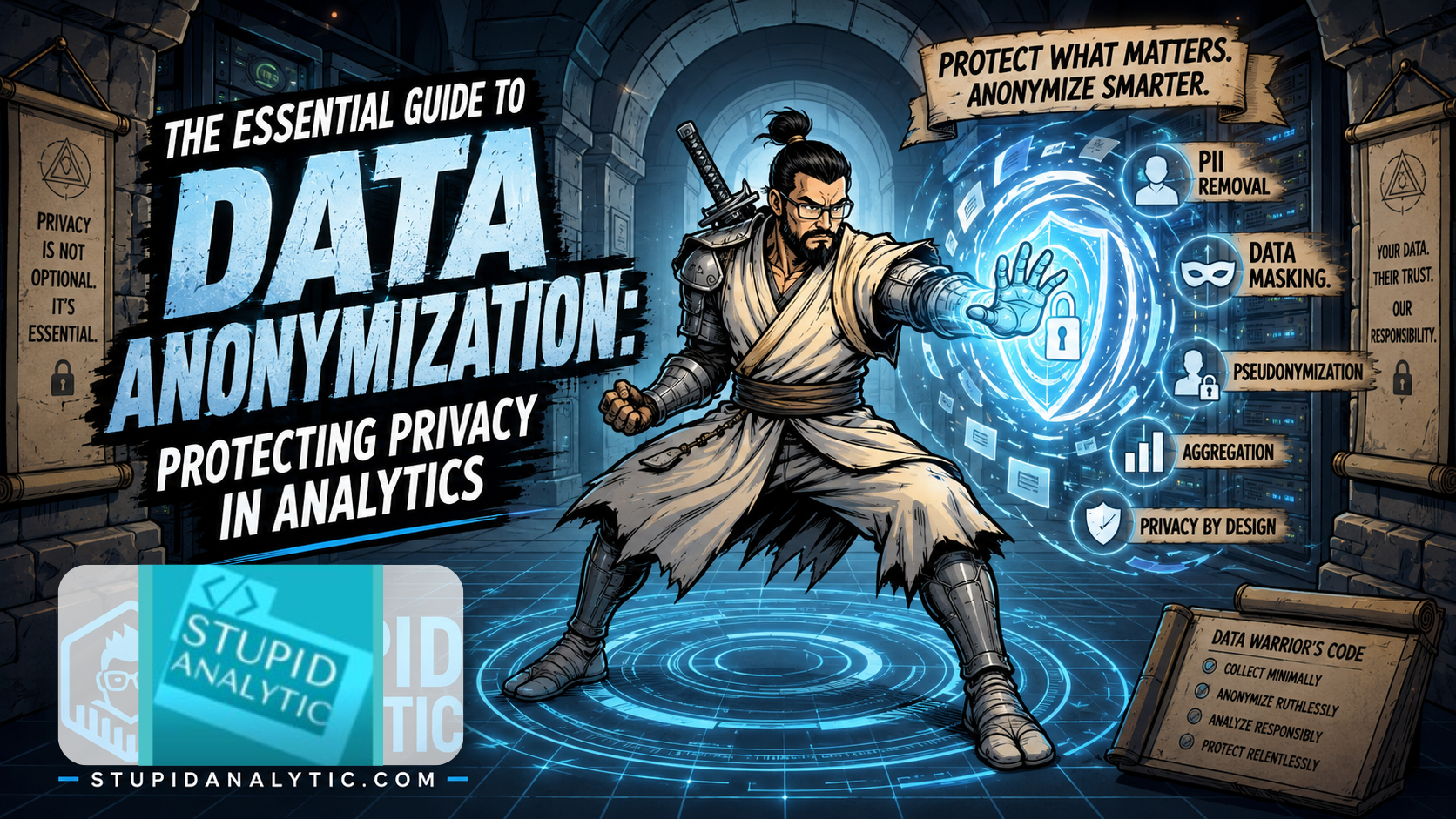
In the modern landscape of reporting, technical prowess is only half the battle. To be a true “Data Warrior,” you must also be a guardian of privacy. While we often focus on the accuracy of our ROCCC-solid data, Data Anonymization for Data Analysts is the framework that keeps our insights ethical, legal, and professional.
At a Glance
What is Data Anonymization?
Data anonymization is the process of protecting sensitive information by removing or altering data that could identify an individual. This is specifically aimed at Personally Identifiable Information (PII)—data that can be used alone or combined with other sets to track down a person’s identity.
For an analyst, this means ensuring that the “Who” behind the data remains invisible, allowing the “What” and “Why” to shine safely. Without these safeguards, a simple reporting error could lead to a massive privacy breach.
Practical Techniques in Your Workflow
When you hear about Data Anonymization for Data Analysts, it usually involves three tactical maneuvers which are even highlighted by Google’s Data Analytics community as Best Practices to maintain data privacy. Understanding the difference between these is what separates a junior reporter from a Strategic Architect.
- Hashing: This involves using fixed-length codes (like a SHA-256 string) to represent data columns. This is the “Gold Standard” for analysts because it allows you to join tables in SQL or Snowflake using the hashed ID without ever seeing the subject’s real name.
- Masking: This technique involves altering values to hide sensitive parts while keeping the format intact. For example, showing a credit card as
XXXX-XXXX-1234allows you to verify the data type without exposing the full number. - Blanking: The ultimate “purge”—simply removing or nullifying the PII column entirely from your environment. This is the safest route when the specific identity of the user adds zero value to the final report.
Your Role: Responsibility vs. Execution
A common misconception in the industry is that the analyst must build the anonymization engine. In reality, organizations are responsible for the infrastructure.
- The Standard: Usually, a Data Engineer or Security Team handles de-identification before you ever touch the data.
- The Analyst’s Exception: If you are working with a local copy for development or a “Sandbox” environment, you are often required to anonymize that data before processing it. This prevents PII from leaking into your testing scripts or Power BI mockups.
High-Stakes Discovery: PII Checklist
Whether you work in Healthcare, Finance, or general business services, you must be able to spot data that requires a privacy shield. If your dataset contains these, it’s time to flag it for anonymization:
- Personal IDs: Names, Photographs, and Social Security numbers.
- Digital Footprints: IP addresses, Email addresses, and Account numbers.
- Physical Tracking: License plates, Telephone numbers, and Medical records.
In industries like healthcare, the process is often called De-identification, which is a comprehensive “wipe” of all identifying markers to ensure the stakes—which are incredibly high—are managed safely.
Why This Skill Defines Your Career
Mastering Data Anonymization for Data Analysts isn’t just about compliance; it’s about trust. Imagine a world where everyone had access to your medical history or bank balance—it would be fundamentally unsafe. By protecting privacy, you ensure your analysis builds a safer, more ethical world.
Key Takeaways
Data Anonymization for Data Analysts is an essential skill centered on protecting Personally Identifiable Information (PII). Analysts must understand techniques like hashing, masking, and blanking to safeguard sensitive data. While organizations typically handle large-scale de-identification, analysts are often responsible for anonymizing data in testing and development environments. Identifying PII (e.g., SSNs, IP addresses, medical records) is critical, particularly in high-risk sectors like Healthcare and Finance, to maintain Data Ethics and security.
Ready to level up? Now that your data is secure, make sure it’s also Biased and Unbiased to give your stakeholders the most accurate picture possible!
Related Reads
- The Open Data Debate: Balancing Public Access with Data Ethics and Privacy
- The Essential Guide to Data Anonymization: Protecting Privacy in Analytics
- 6 Pillars of Data Ethics: The Analyst’s Code of Honour
- 5 Powerful ways to determine Good data and Bad data (Make it ‘ROCCC’ Solid)
- The Essential Guide to Identifying 4 Types of Biases in Data
Follow us for more: www.youtube.com/@stupidanalytic485