
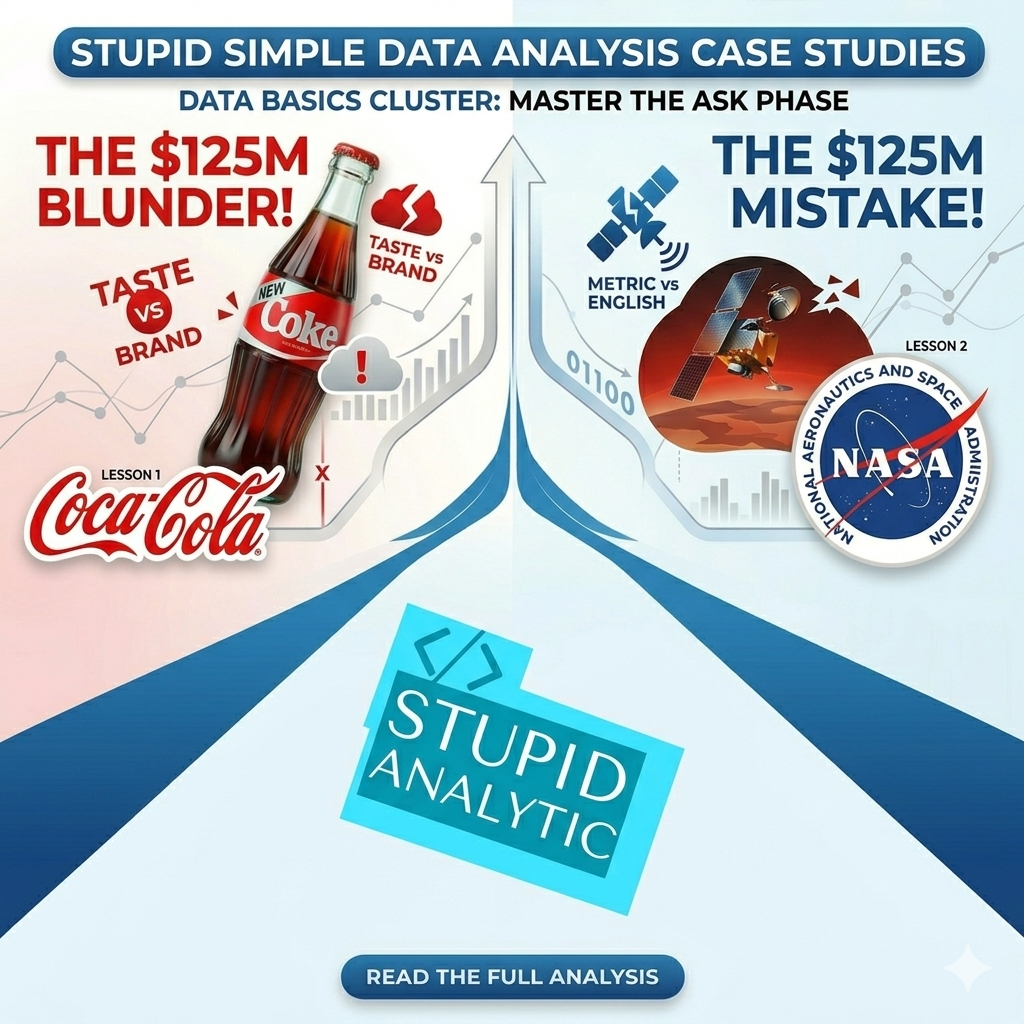
Data Analysis Case Studies: from NASA to Coke
Reviewing real-world Data Analysis Case Studies: from NASA to Coke is the best way to transition from a technical beginner to a strategic Reporting Analyst. While many people focus on learning tools like Power BI or SQL, these legendary stories from NASA, Coke, and PepsiCo prove that your strategic interpretation of data is the most valuable skill you can own.
In the world of Data Thinking, we often focus on the “How” of automation. But as a Reporting Analyst, I’ve learned that the most expensive corporate mistakes happen because of bad interpretation, not bad code. This is exactly what we see when exploring Data Analysis Case Studies: from NASA to Coke.
At a Glance
Understanding the difference between Data-Driven vs. Data-Inspired outcomes is what separates a “Order Taker” from a “Data Leader.” By looking at Data Analysis Case Studies: from NASA to Coke, we see four scenarios where the human element of data changed the course of business history.
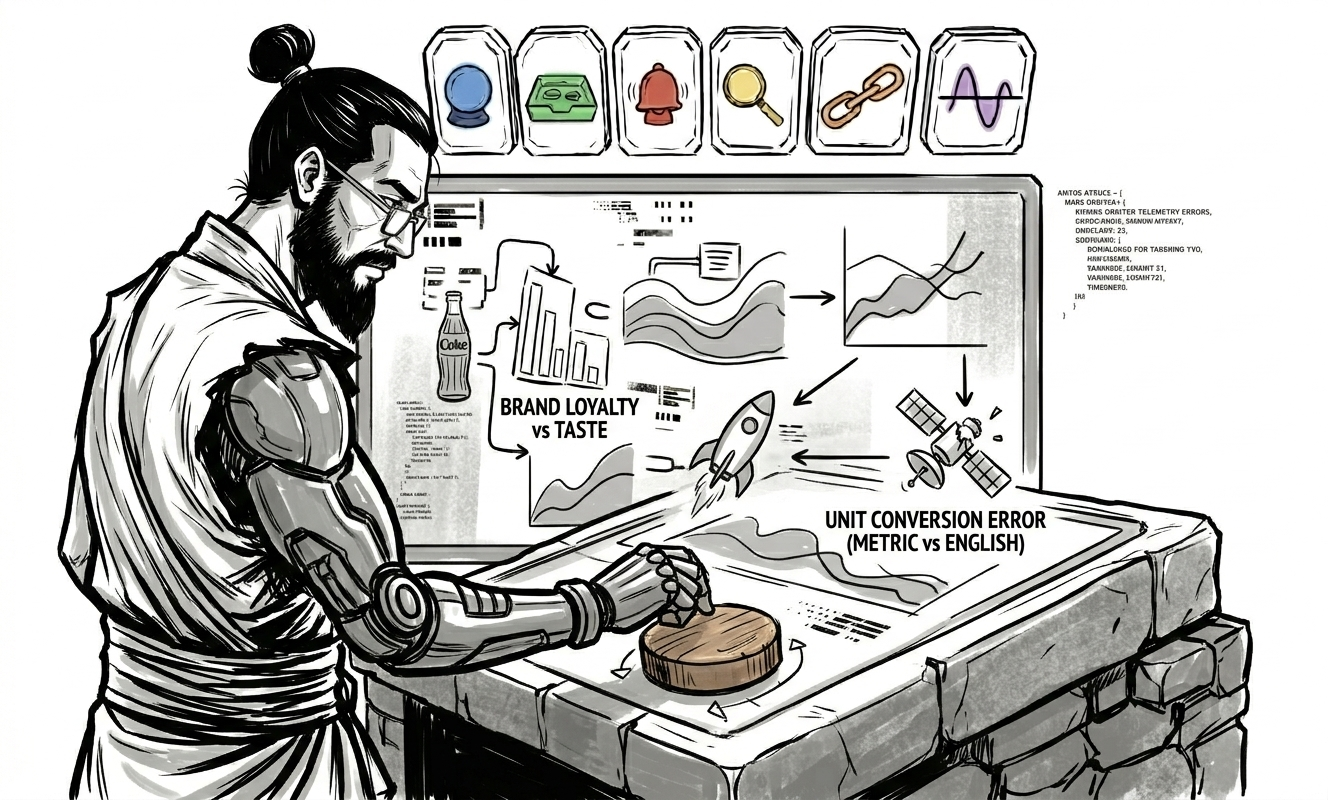
The “Data-Driven” Disaster: New Coke (1985)
In 1985, Coca-Cola made a blunder that is still studied in MBA programs worldwide. Facing pressure from Pepsi, Coke launched “New Coke.”
- The Data: They conducted blind taste tests with 200,000 subjects. The quantitative data was clear: people preferred the taste of New Coke.
- The Decision: Based strictly on this “accurate” data, they killed the original formula.
- The Failure: The data measured taste but ignored identity. As noted in historical marketing reviews by The New York Times, the emotional connection to the brand was a variable the analysts completely missed.
⚔️ The Data Warrior Pro-Tip: Never confuse a metric (taste) with a reality (customer sentiment). This is a pillar lesson in all Data Analysis Case Studies: from NASA to Coke.
The Governance Nightmare: The Mars Climate Orbiter (1999)
NASA lost a $125 million spacecraft not because the science was wrong, but because of a “Stupid Simple” communication error.
- The Data: The navigation team and the engineering team both had 100% accurate data.
- The Error: One team used the International System of Units (Newtons), while the other used English Engineering Units (Pounds).
- The Result: The Orbiter’s thrusters fired with the wrong force, and the craft burned up in the Martian atmosphere.
⚔️ The Warrior Lesson: This is a failure of Data Governance. When examining Data Analysis Case Studies: from NASA to Coke, we see that verifying metadata is just as important as the calculation itself.
The “Data-Inspired” Triumph: PepsiCo
On the flip side, PepsiCo shows us how to win by looking at the bigger picture. Instead of just reacting to sales dips, they pivoted their entire infrastructure.
- The Strategy: They established a central cloud-based hub where data could flow across all departments.
- The Shift: Instead of just looking at their own internal sales, they supplemented their datasets with external consumer “intent” data.
- The Result: By taking a Data-Inspired approach, they gained a holistic understanding of the consumer journey, allowing them to anticipate needs rather than just reacting to them.
⚔️ The Warrior Lesson: True innovation happens when you combine internal facts with external context. This is the heart of a data-inspired strategy.
The Hidden Risk: Interpreting Accurate Data Incorrectly
It is entirely possible to have solid, clean data and still make the wrong choice. In a customer support center, for example, a manager might see a low CSAT (Customer Satisfaction) score and immediately demand faster call times.
However, a Data-Inspired analyst would look deeper. They would:
- Read the qualitative descriptions.
- Interview the support representatives.
- Observe the team’s stress levels.
By adding human interpretation to the raw numbers, you find the root cause (like a broken UI) rather than just chasing a higher metric.
Key Takeaways for the Data Warrior
It is entirely possible to have solid, clean data and still make the wrong choice. In a customer support center, for example, a manager might see a low CSAT score and immediately demand faster call times. However, a Data-Inspired analyst would look deeper into the qualitative descriptions and interview the reps.
By studying Data Analysis Case Studies: from NASA to Coke, you learn to find the root cause rather than just chasing a higher metric.
As you progress through your analytics journey, remember these three rules derived from our Data Analysis Case Studies: from NASA to Coke:
- Ask “Why” as often as “What”: Don’t be like New Coke. Context is just as important as the count.
- Standardize Everything: Don’t be like NASA. Confirm your measurements and units across teams.
- Supplement Your Data: Be like PepsiCo. Look beyond your own spreadsheet to see the market reality.
Using both logic and creativity is the only way to interpret data with the highest level of care. Keep a data-driven mindset, but stay data-inspired.
If you haven’t read my foundational guide on Data-Driven vs Data-Inspired decision making, check that out first to understand the ‘Ask’ phase.”
Follow us for more: www.youtube.com/@stupidanalytic4853