Small Data vs. Big Data: Why Small Data Beats Big Data (Sometimes)
If you’ve been hanging around the data world for more than five minutes, you’ve heard the term “Big Data” whispered like it’s some kind of magic spell. People talk about it like it’s the only thing that matters. And then there’s also a “Small data” very few talk about. So, let’s talk about both of them here.
Small Data vs. Big Data is the ultimate showdown in the modern analytics world, but most people are fighting the wrong battle. If you’ve been hanging around the data industry for more than five minutes, you’ve heard the term “Big Data” whispered like it’s some kind of magic spell. People talk about it like it’s the only thing that matters.
But here is a secret most “experts” won’t tell you: Big data is often just a big headache.
At a Glance
As a Data Analyst, I’ve realized that understanding Small Data vs. Big Data is the difference between actually solving a problem and just drowning in rows of useless info. If you want to be a Data Warrior, you need to know which one to use and when.
The “Stupid Simple” Comparison
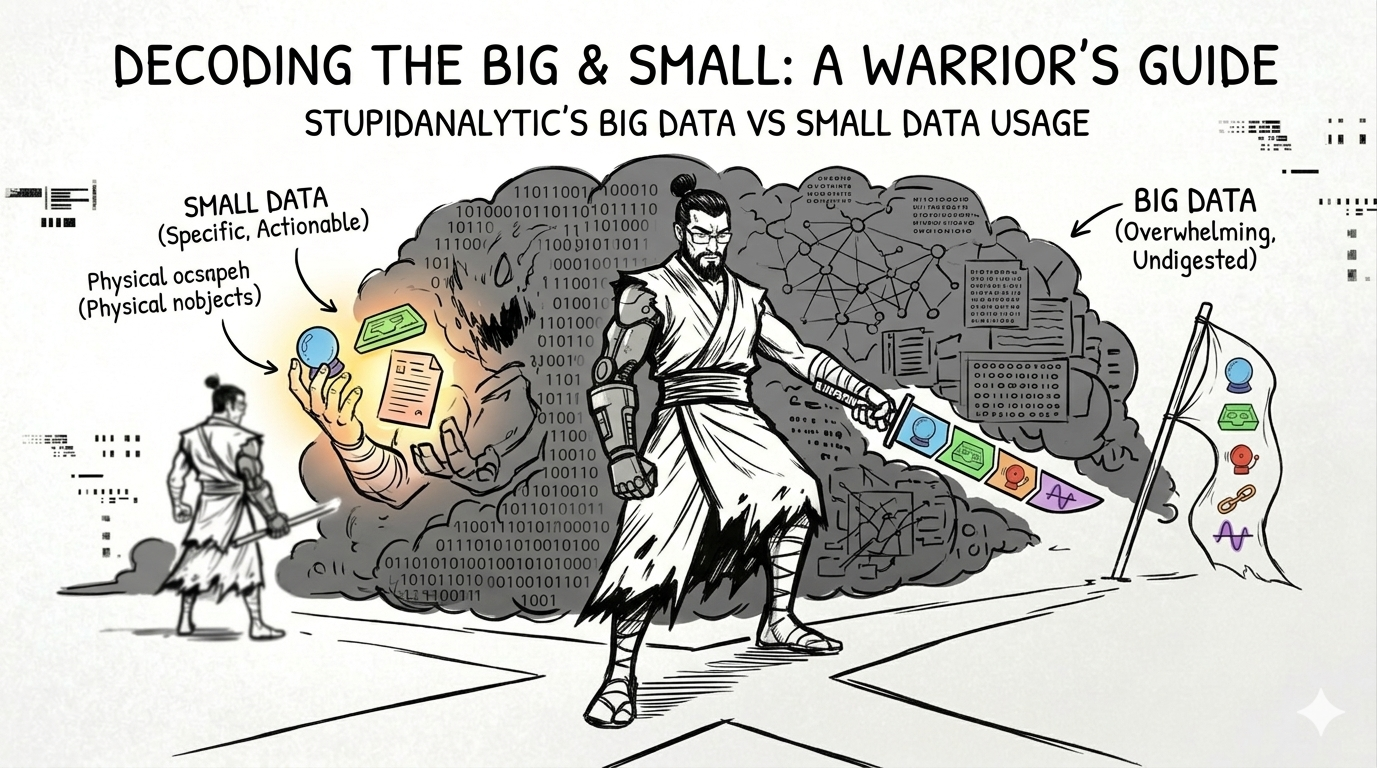
Think of it like this: Small Data is a focused strike with a katana. Big Data is trying to swing a giant club while blindfolded. Both can work, but one requires a lot more effort to master.
| Feature | Small Data | Big Data |
| The Vibe | Specific metrics over a short time. | Massive datasets over years. |
| The Toolbox | Spreadsheets (Excel is your best friend). | Databases and complex SQL queries. |
| The User | Small to mid-sized businesses. | Tech giants and massive corporations. |
| The Effort | Simple to store and visualize. | Takes massive effort to manage. |
The 4 Vs of Big Data
In the Reporting Analyst Roadmap, we focus on strategy. When you move into the world of Small Data vs. Big Data, you’ll hear people talk about the “Three Vs.” I prefer the Four Vs because that last one is where most analysts fail.
- Volume: The sheer amount of data. It’s a mountain, not a molehill.
- Variety: Different types of data—emails, photos, numbers, and sensor logs all mixed together.
- Velocity: How fast that data is flying at you. If you can’t process it fast, it’s useless.
- Veracity: The most important V. This is the quality and reliability. If your data is “Big” but “Wrong,” you’re just making mistakes at scale.
The Big Data Nightmare: Why Bigger Isn’t Always Better
Everyone wants Big Data until they actually have to clean it. Here are the challenges you’ll face:
- Data Overload: You end up with way too much irrelevant information. It’s like trying to find a specific needle in a field of haystacks.
- The Hidden Truth: Important insights get buried so deep that decision-making actually becomes slower.
- The Access Barrier: Big data often lives in complex silos that aren’t easily accessible to the average analyst.
- Algorithmic Bias: If the data is messy, your AI and models will be “unfairly biased.” Garbage in, garbage out.
The Good News: The Power of Big Data
When handled correctly, the Small Data vs. Big Data balance can transform a business. Big data allows companies to spot buying patterns before the customer even knows they want something. It helps protect a brand by tracking every piece of feedback online in real-time.
But remember: Big data is only useful when it’s broken down into Small Data pieces that humans can actually understand.
Which One Should You Choose?
If you are a beginner, master Small Data first. Get comfortable with specific metrics and spreadsheets. Once you can tell a story with a small dataset, then—and only then—should you grab the heavy armor of Big Data.
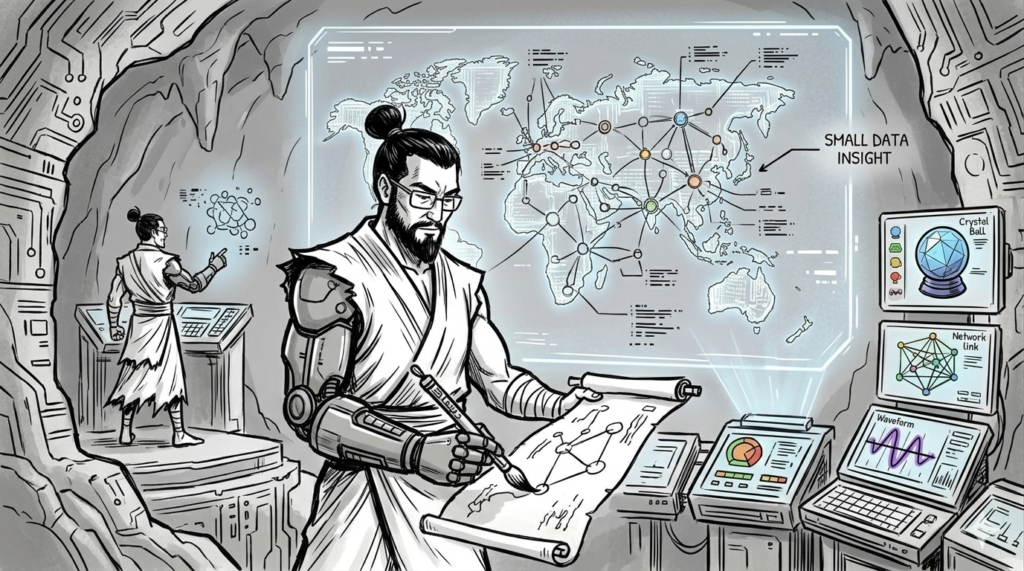
Stupid Analytic Tip: Don’t let a “Big Data” title intimidate you. At the end of the day, even the biggest database is just a collection of small stories waiting to be told.
The Final Verdict: Precision Over Power
At the end of the day, the Small Data vs. Big Data debate isn’t about which one is “better”—it’s about which one is useful. Most mid-sized businesses don’t need a massive Hadoop cluster; they need a clean Excel sheet and a Reporting Analyst who knows how to read it.
Don’t let “Big Data” FOMO (Fear Of Missing Out) force you into expensive tools you don’t need. Focus on the data that answers your stakeholder’s immediate questions. Whether you are using a spreadsheet or a massive SQL database, the goal is clarity, not complexity. You can also refer this MIT Sloan case study for real-word guidance.
Follow us for more: www.youtube.com/@stupidanalytic4853
Also Read: