
Data Collection Strategies
In the lifecycle of a data project, the “Process” stage is often where the glory happens, but the “Prepare” stage—specifically how you select and collect your data—is where the project is won or lost. As a Data Analyst, you must treat your data sources as the foundation of your strategic architecture.
At a Glance
If the foundation is weak, the entire dashboard collapses. To avoid this, you need robust data collection strategies that align with your specific business goals.
1. Understanding Data Sources: First, Second, and Third-Party
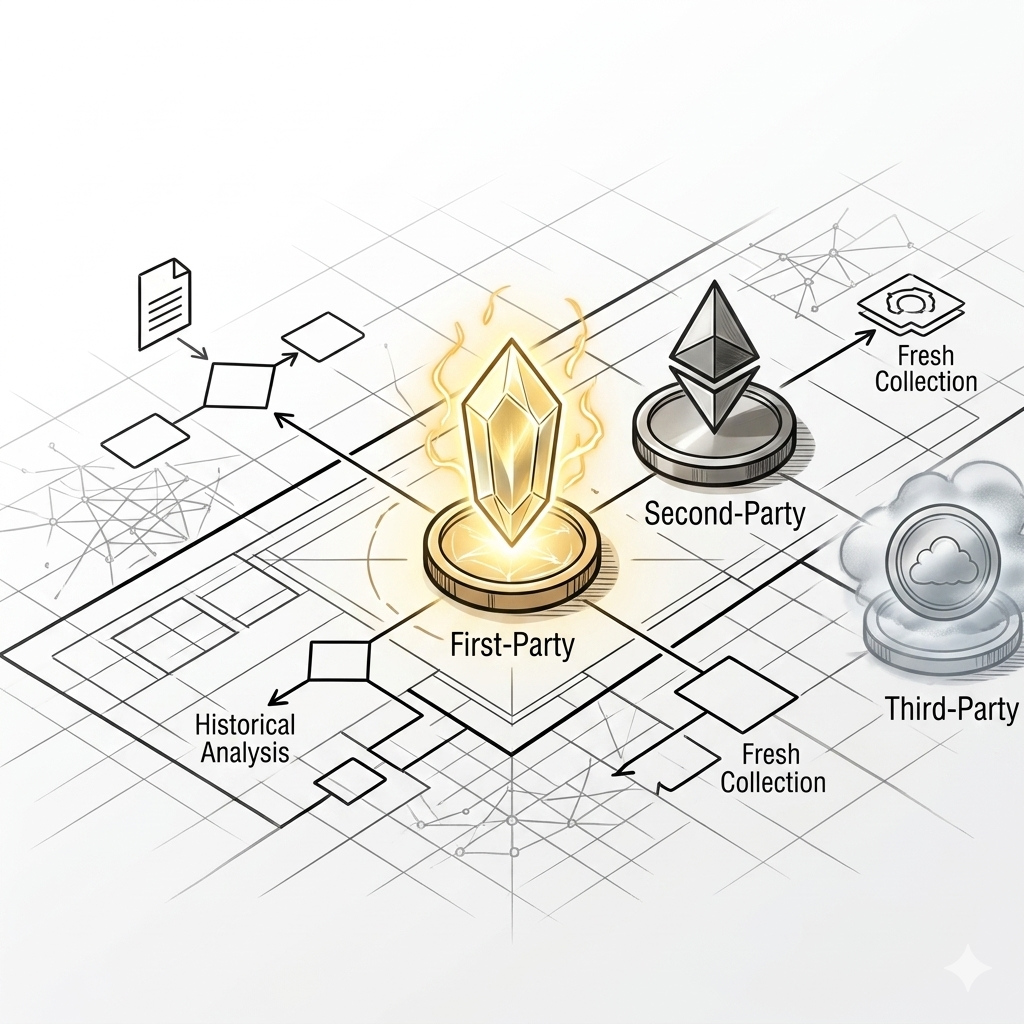
The first step in any collection plan is identifying the “Who” and “How” of your source material. Not all data is created equal, and where it comes from dictates its reliability.
- First-Party Data: This is the gold standard. It is data you collect yourself using your own resources (e.g., your website’s Litespeed logs, customer surveys, or internal CRM). It is highly accurate and relevant to your specific problem.
- Second-Party Data: This is data collected directly by another group and then purchased or shared. Think of it as someone else’s first-party data. It is reliable but might require more cleaning to fit your schema.
- Third-Party Data: This is data sold by a provider that didn’t collect it themselves (aggregators). While it provides a massive “Data Lake” of information, it often lacks the granular accuracy of primary sources.
2. Solving the Business Problem with Relevant Datasets
A common mistake in data collection strategies is gathering data because it is “interesting” rather than “useful.” Every dataset you select must serve your core problem question.
For example, if your objective is Time Series Analysis to track user behavior on your WordPress site, you must ensure your collection includes date-stamped logs. Without a “Time” variable, your trend analysis is dead on arrival.
3. Defining Sample Size and Strategic Focus
How much data is enough? In the world of Big Data, more isn’t always better.
- Random Sampling: For general population trends, a random slice of your historical data might suffice.
- Strategic Collection: If your project focuses on a specific niche—like high-value “Data Warrior” subscribers—you need a focused sample size that meets strict criteria.
As an analyst, you must make reasonable decisions about volume to avoid “Analysis Paralysis” and high storage costs.
4. Establishing a Time Frame for Trends
Time is your most expensive resource. Your data collection strategies must account for the urgency of the business need:
- Immediate Answers: If the CEO needs an answer by EOD, you don’t have time to wait for a new 30-day collection cycle. You must rely on Historical Data.
- Long-Term Trends: If you are tracking the impact of a new SEO strategy (like GEO), you must decide upfront how long the collection period will last to ensure statistical significance.
5. The “Time-Driven” Collection Logic
When deciding between new collection and historical analysis, follow this logic flow:
- Do you have time to wait? If Yes, collect fresh First-Party data for maximum accuracy.
- Is the problem urgent? If Yes, pivot to existing internal datasets or purchase Third-Party data to bridge the gap.
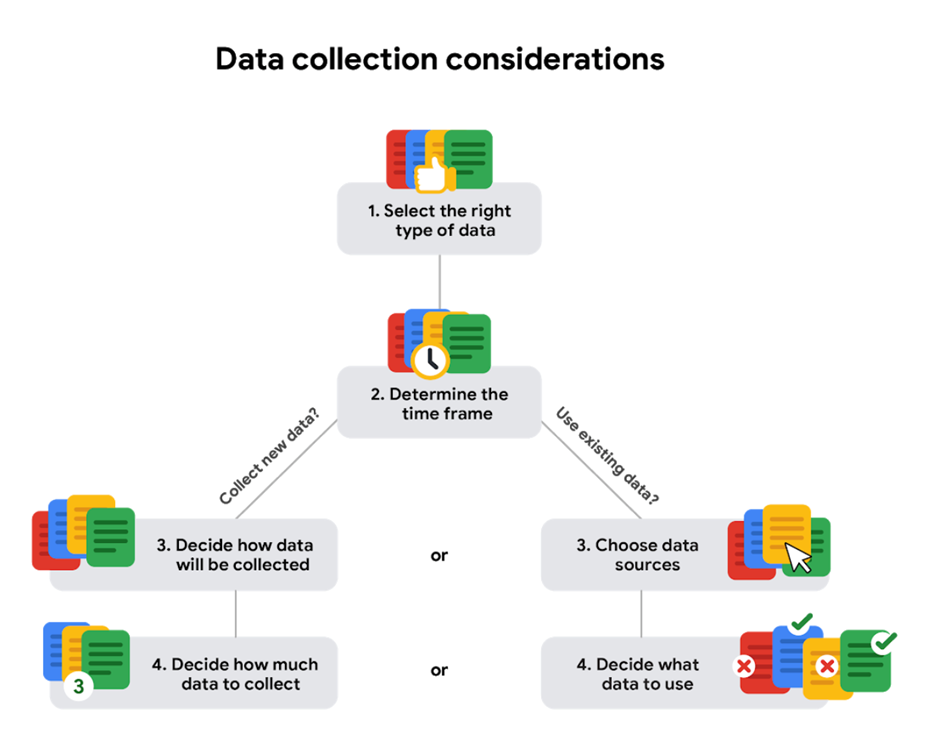
If you are collecting your own data, decide how long you will need to collect it, especially if you are tracking trends over a long period of time. If you need an immediate answer, you might not have time to collect new data. In this case, you would need to use historical data that already exists.
The flowchart below clearly describes the considerations for data collection that needs to be done over a period of time, and this will help you map your data collection strategies accordingly.
Why Strategy Beats Syntax in Collection
Mastering the technical side of Power Query or SQL is vital, but knowing which data to pull into those tools is what defines a Strategic Architect. By aligning your time frame, source, and sample size before you ever run a query, you ensure your analysis is both efficient and impactful.
For further reading on maintaining data integrity, check out IBM’s guide to data integrity. For internal Roadmaps on building your own data pipelines, visit our GeekHub page.
Follow us for more: www.youtube.com/@stupidanalytic485
Also Read: